Latest News

  • Maadili ya Mwanaume wa Kitanzania

    Utangulizi

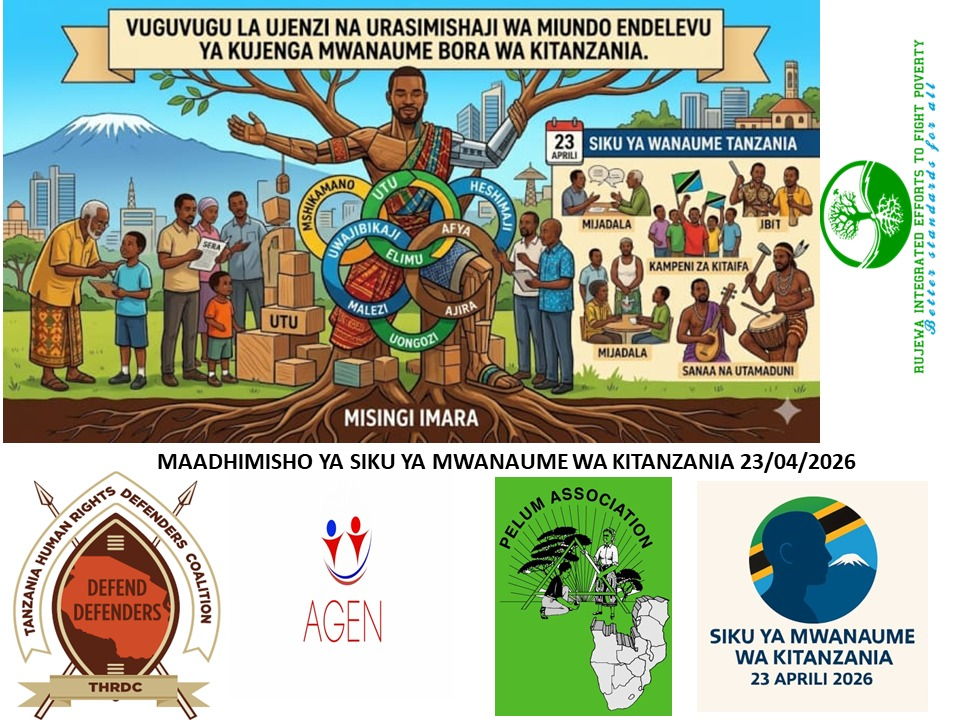
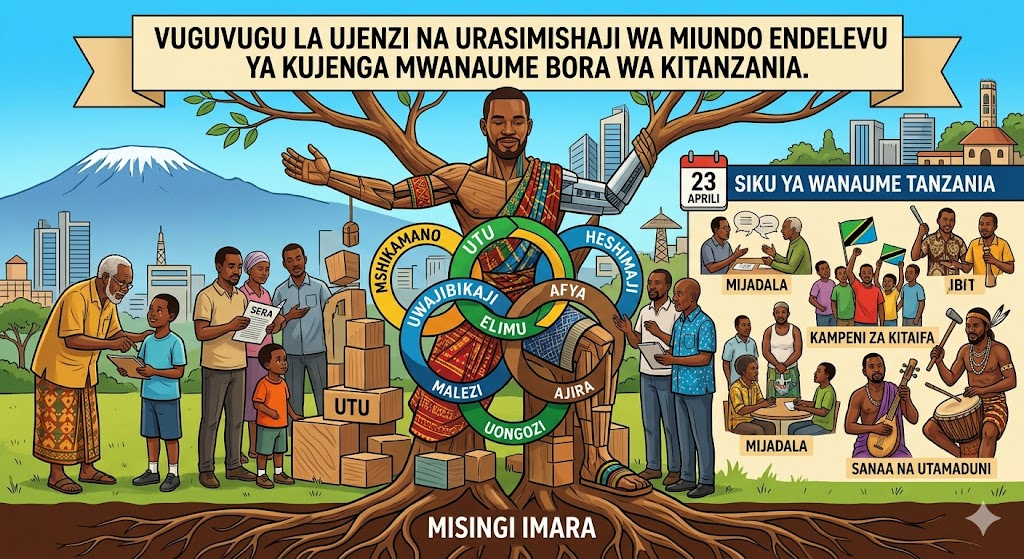
    Maadili ya mwanaume wa Kitanzania ni mwongozo wa kimaadili, kijamii na kiutamaduni unaojengwa juu ya misingi ya historia, sera na dira za taifa. Yanalenga kumtengeneza mwanaume mwenye utu, mshikamano, uzalendo na uwajibikaji katika familia, jamii na taifa. Kupitia nyaraka mbalimbali za kitaifa — Dira ya Maendeleo ya Tanzania 2050, Sera ya Utamaduni, Sera ya Maendeleo ya Jamii (Community Development Policy), Wimbo wa Taifa, na Sera ya Jinsia na Maendeleo ya Wanawake 2023 — tunapata taswira ya mwanaume bora wa Kitanzania anayejali utu, usawa wa kijinsia, maendeleo endelevu na mshikamano wa kitaifa.

    Hapa chini tumekusanya jumla ya maadili 40 ya mwanaume wa Kitanzania.

    🏅 Maadili ya Mwanaume wa Kitanzania

    Kutoka Dira ya Maendeleo ya Tanzania 2050

    1. Kuthamini na kulinda amani na mshikamano wa kitaifa.
    2. Kuheshimu utawala wa sheria na haki za binadamu.
    3. Kuwa na uwajibikaji na uwazi katika utumishi wa umma.
    4. Kuendeleza uchumi shirikishi na wa ushindani.
    5. Kuthamini elimu na ujuzi wa kizazi kipya.
    6. Kuwa mstari wa mbele katika ubunifu na teknolojia.
    7. Kulinda na kuendeleza mazingira na rasilimali asilia.
    8. Kuwa na moyo wa kujitegemea na kujivunia utambulisho wa taifa.

    Kutoka Sera ya Utamaduni

    1. Kuenzi mila na desturi nzuri na kupiga vita zile mbaya.
    2. Kuthamini na kulinda lugha ya Kiswahili kama kitambulisho cha taifa.
    3. Kupinga unyanyasaji wa wanawake na watoto.
    4. Kuthamini kazi halali kama msingi wa maisha.
    5. Kuwa na nidhamu na heshima kwa utu wa mtu.
    6. Kukuza ushirikiano, mshikamano na uzalendo.
    7. Kuthamini na kulinda urithi wa utamaduni na historia ya taifa.
    8. Kuendeleza sanaa na ufundi kama nyenzo ya maendeleo.
    9. Kuwa mstari wa mbele katika uhifadhi wa mazingira.
    10. Kuthamini lugha za jamii kama hazina ya historia na utambulisho.

    Kutoka Sera ya Maendeleo ya Jamii ya (Community Development Policy) (1996)

    1. Kuwa na moyo wa kujitegemea na kupambana na umasikini.
    2. Kushiriki kikamilifu katika maamuzi ya maendeleo ya jamii.
    3. Kuthamini na kuendeleza familia kama msingi wa maendeleo.
    4. Kuwa na uwajibikaji wa kifamilia na kijamii.
    5. Kupinga rushwa na ufisadi.
    6. Kuthamini mazingira safi na salama.
    7. Kuendeleza ushirikiano na mshikamano wa kijamii.
    8. Kuthamini elimu ya watu wazima na mafunzo ya ujuzi.
    9. Kuwa mstari wa mbele katika kujitolea na kujenga jamii.
    10. Kuwa na heshima kwa sheria na viongozi bora.

    Kutoka Wimbo wa Taifa

    1. Kudumisha uhuru na umoja wa taifa.
    2. Kuwa na moyo wa hekima, umoja na amani.

    Kutoka Sera ya Jinsia na Maendeleo ya Wanawake 2023

    1. Kuheshimu na kulinda haki za wanawake.
    2. Kushirikiana katika majukumu ya kifamilia.
    3. Kupinga ukatili wa kijinsia.
    4. Kuhimiza usawa wa kijinsia kazini na nyumbani.
    5. Kuthamini mchango wa wanawake katika maendeleo ya taifa.
    6. Kujenga familia yenye mshikamano na heshima.
    7. Kushirikiana katika maamuzi ya kifamilia na kijamii.
    8. Kuhimiza elimu ya wasichana.
    9. Kujiepusha na mila kandamizi zinazodhalilisha wanawake.
    10. Kukuza mshikamano wa kijamii kwa usawa.

    Hitimisho


    Maadili haya 40 yanamjenga mwanaume wa Kitanzania kama mzalendo, mwenye heshima, mlinzi wa familia na taifa, mtetezi wa haki za binadamu, na mshiriki wa maendeleo jumuishi. Yanaunganisha historia ya taifa, sera za kijamii na utamaduni, pamoja na dira ya maendeleo ya 2050, ili kuunda taswira ya mwanaume bora anayechangia katika ustawi wa taifa na kizazi kijacho.

    Kwa taarifa zaidi tembelea 👉🏿 https://www.agentz.org/index.php/2026/03/07/kuelekea-maazimisho-ya-siku-ya-mwanaume-wa-kitanzania-23-april-2026/ (au bofya hapa)

  • Kuelekea Maazimisho ya Siku ya Mwanaume wa Kitanzania 23 April 2026

    Bado siku 47 kufikia kilele cha Maadhimisho ya Siku ya mwanaume wa kitanzania.

    1. Kujua zaidi kuhusu mchango wa mwanaume wa kitanzania tembelea 👉🏿https://youtu.be/NVa6Zd8PkS8?si=KsWEfMWO5BVerUQx (au bofya hapa)

    2. Kupata taarifa zaidi kuhusu tukio letu tembelea 👉🏿 https://www.agentz.org/index.php/conferences/ (au bofya hapa)

    3. Kushiriki katika kuandaa Agenda ya Mwanaume wa Kitanzania 2026. Tafadhali jaza dodoso la kielekroniki hapa 👉🏿https://forms.gle/AgusMn9Z7JwFSXax8 (au bofya hapa)

    4. Ukitaka kujua zaidi Kwa Nini tunamwazimisha mwanaume wa kitanzania, tafadhali tembelea link ifuatayo 👉🏿https://www.agentz.org/index.php/the-tanzanian-man/ (au bofya hapa)

    4. Mada ya tarehe 6/3/2026, ijumaa, ni kuhusu Maadili ya mwanaume wa kitanzania. Tutasambaza link yenye video punde

    5. Mada ijayo tarehe 13/03/2026 ni Mchango wa Mwanaume wa Kitanzania katika ujenzi wa utamaduni wa kitanzania

  • Mada kuelekea siku ya mwanaume wa kitanzania 23 Aprili: Mchango wa Mwanaume katika Ujenzi wa Familia, Jamii na Taifa

    Mjadala katika video unapatikana katika kiunganishi kifuatacho 👇🏿
    https://youtu.be/NVa6Zd8PkS8?si=KsWEfMWO5BVerUQx au bofya [hapa]

    Ujenzi wa familia imara ni msingi wa ustawi wa jamii na taifa. Mwanaume ana nafasi ya kipekee katika mchakato huu, na mchango wake hujidhihirisha katika nyanja kadhaa:

    Ndani ya Familia

    • Malezi na maadili: Mwanaume huchangia katika kulea watoto kwa kuwapa nidhamu, maadili na mwongozo wa kimaisha. Wahenga walisema “kuzaa si kazi, kazi ni kulea”, wakisisitiza jukumu la baba katika malezi bora.
    • Uongozi wa kifamilia: Ingawa wanawake mara nyingi hushikilia uchumi wa familia, bado mwanaume ana wajibu wa kuhakikisha mshikamano na maamuzi ya pamoja yanayojenga familia yenye maelewano.
    • Msaada wa kihisia na kiroho: Baba hutoa usalama wa kihisia na kiroho kwa familia, akiwajengea watoto na mama mazingira ya kujiamini na kustawi.

    Katika Jamii

    • Mfano wa kuigwa: Mwanaume mwenye maadili na nidhamu hujenga taswira chanya kwa vijana na jamii nzima.
    • Ushiriki wa kijamii: Baba anaposhiriki katika shughuli za kijamii na maendeleo ya vijiji au mitaa, anachangia mshikamano na mshikikano wa kijamii.
    • Kukuza mshikamano wa kijinsia: Ushirikiano wa wanaume na wanawake katika familia huimarisha usawa wa kijinsia na kupunguza migongano ya kijamii.

    Katika Taifa

    • Nguvu kazi na uchumi: Mwanaume ni sehemu ya nguvu kazi ya taifa, akichangia katika kilimo, viwanda na sekta nyingine za uzalishaji.
    • Uongozi na siasa: Baba aliyejengeka katika familia imara ana uwezekano mkubwa wa kuwa kiongozi bora wa kijamii na kisiasa.
    • Utambulisho wa kitaifa: Mwanaume anayethamini mila na desturi za taifa husaidia kulinda utambulisho wa kitanzania na kuimarisha mshikamano wa kitaifa.

    Muunganiko wa Familia, Jamii na Taifa

    Familia imara huzaa jamii yenye mshikamano, na jamii imara hujenga taifa lenye nguvu. Mwanaume, kama mhimili wa familia, anaposhiriki kikamilifu katika malezi, uchumi na uongozi, mchango wake huenea hadi ngazi ya kijamii na kitaifa.

    Kwa maneno mengine: Baba bora hujenga Familia bora inayopelekea kuwa Jamii bora na hatimaye Taifa bora.

    Tembelea tovuti ili kupata taarifa zaidi: https://www.agentz.org/index.php/conferences/

    Angalia video ya mada hapa

  • Agenda ya Wanaume wa Kitanzania 2026

    Utangulizi

    Karibu kwenye Dodoso la Kuandaa Ajenda ya Mwanaume wa Kitanzania 2026.

    Siku ya Mwanaume wa Kitanzania (Aprili 23) ni jukwaa la kitaifa linalolenga kutafakari nafasi ya wanaume katika familia, jamii na taifa. Kupitia fomu hii, tunakusanya maoni na mawazo yako ili kuunda Ajenda ya Mwaka 2026, ambayo itasaidia kuimarisha mshikamano wa kijamii, usawa wa kijinsia, na maendeleo endelevu ya taifa letu.

    Ajenda hii inalenga:

    Familia na Malezi: Kuimarisha jukumu la wanaume katika malezi na ustawi wa familia.

    Uwezeshaji Kiuchumi: Kuwezesha wanaume kushiriki kikamilifu katika uchumi wa kisasa sambamba na wanawake.

    Afya na Ustawi: Kuboresha afya ya wanaume, ikiwemo afya ya akili, uzazi na kupunguza changamoto za kiafya.

    Uongozi na Jamii: Kuongeza uwajibikaji wa wanaume katika uongozi, maamuzi na mshikamano wa kijamii.

    Teknolojia na Ubunifu: Kuhakikisha wanaume wanatumia TEHAMA na ubunifu kwa maendeleo ya familia na taifa.

    Usawa na Haki za Kijinsia: Kupunguza ukatili wa kijinsia na kukuza usawa wa kijinsia kwa mujibu wa Sera ya Taifa ya Jinsia 2023.

    Dira ya Taifa 2050: Kuchangia katika malengo ya taifa ya uchumi jumuishi, maendeleo ya kijamii na ustawi wa mazingira.

    Ushiriki wako ni muhimu katika kuunda mustakabali wa wanaume wa Kitanzania. Tafadhali jibu maswali kwa uaminifu na kwa mtazamo wako binafsi. Tafadhali bonyeza [hapa] kujaza dodoso.

  • 📚Book Launch Announcement


    📚 The Evolution of African Feminist Theory in Resistance to Western Patriarchal Neoliberalism:
    How Tanzanian Women Have Articulated and Grounded African Feminism

    🌍 Launch Date: 22 April 2026
    📖 Author: Prof. Rasel M. Madaha
    🎉 Special Occasion: During the Commemorations of Tanzanian Men 2026 (https://www.agentz.org/index.php/conferences/)

    Publisher: The Council for the Development of Social Science Research in Africa (CODESRIA) (https://codesria.org/about-us-codesria/)


    🔹 About the Book

    This landmark publication examines the evolution of African feminist theory, focusing on how Tanzanian women have resisted Western patriarchal neoliberalism and grounded feminism in African realities. It bridges scholarship, activism, and lived experience—offering a transformative narrative for civic and academic audiences.


    🔹 Why This Launch Matters

    • Aligns with the Commemorations of Tanzanian Men 2026, highlighting the interconnectedness of gender, civic identity, and national reflection.
    • Challenges dominant Western feminist frameworks while elevating African women’s voices.
    • Provides critical insights for scholars, activists, policymakers, and civic leaders.
    • Strengthens dialogue on gender equality and African-centered scholarship.

    🔹 Join the Celebration

    📅 Save the Date: 22 April 2026
    📍 Launching during national commemorations, with availability online and at select academic and civic forums.

    Spread the word! Share this announcement to amplify African feminist voices and honor Tanzanian civic identity.


    📚 Tangazo la Uzinduzi wa Kitabu

    Mageuzi ya Nadharia ya ufeministi Barani Afrika katika Kupinga Ubeberu wa Kibepari wa Kizungu:
    Jinsi Wanawake wa Kitanzania Walivyojenga na Kuweka Msingi wa Ufeministi wa Kiafrika

    🌍 Tarehe ya Uzinduzi: 22 Aprili 2026
    📖 Mwandishi: Prof. Rasel M. Madaha
    🎉 Maadhimisho Maalum: Wakati wa Siku ya Mwanamme wa Kitanzania 2026


    🔹 Kuhusu Kitabu

    Kitabu hiki cha kihistoria kinachunguza mageuzi ya nadharia ya ufeministi barani Afrika, kikieleza namna wanawake wa Kitanzania walivyopinga ubeberu wa kibepari wa Kizungu na kuweka msingi wa ufeministi wa Kiafrika. Ni daraja kati ya utafiti wa kitaaluma, harakati, na maisha halisi.


    🔹 Umuhimu wa Uzinduzi Huu

    • Kinaendana na Maadhimisho ya Siku ya Mwanamme wa Kitanzania 2026, kikisisitiza mshikamano wa kijinsia, uraia, na tafakuri ya kitaifa.
    • Kinapinga mifumo ya kifeministi ya Kizungu na kuinua sauti za wanawake wa Kiafrika.
    • Kinatoa maarifa muhimu kwa wasomi, wanaharakati, watunga sera, na viongozi wa kiraia.
    • Kinaimarisha mjadala kuhusu usawa wa kijinsia na uanaharakati wa kike wa Kiafrika.

    🔹 Ungana Nasi

    📅 Hifadhi Tarehe: 22 Aprili 2026
    📍 Uzinduzi utafanyika wakati wa maadhimisho ya kitaifa, na kitapatikana mtandaoni na katika majukwaa ya kitaaluma na kiraia.

    Sambaza ujumbe huu! Saidia kueneza sauti za wanawake wa Kiafrika na kuenzi utambulisho wa Kitanzania.


    Book Endorsements

    This book approaches African feminism from a historical cum intellectual traditions of Tanzania, in which deep analysis of phenomena permeates rural communities, urban life structures as well as academic classrooms. The book content is appropriately targeted for beginning scholars as well as advanced professionals of non-western resistance and liberation. Rasel Madaha presents a rich, informed, and detailed narrative of the past and the present times of African feminism. He provides a comprehensive framework which paves the way to future discussions and uses of African feminism to benefit humanity in Tanzania, Africa and beyond (Selina Lesiaki Prosper Mushi, Ph.D., Professor, Curriculum and Instruction, Northeastern Illinois University, USA.)

    Rasel Madaha’s book is important and unique. It shows how a locally developed African feminist theory can be operationalized on the ground, building up a movement for change. The book documents in detail how in Tanzania African feminist thinking – African Transformative Feminism –works in practice against growing challenges of patriarchy and neoliberal globalization. This fruitful merging of conceptual thought and practical engagement is particularly impressive at a time, when many forces pull thinkers and practitioners apart: Academics are compelled to publish in journals of strictly academic nature, and development donors demand short-term recommendations, with no interest in conceptual ideas, nor in long-term movement building. Madaha’s book shows an alternative path (Prof. Signe Arnfred, Centre for Gender, Power and Diversity, Roskilde University, Roskilde University, Department of Social Sciences and Business, Building 25.2, po box 260, Universitetsvej 1 DK-4000 Roskilde)

    The Evolution of African Feminist Theory in Resistance to Western Patriarchal Neoliberalism offers a powerful account of how Tanzanian women activists have given expression to African feminism through their own social, cultural, and political context. Drawing on more than two decades of research and engagement with grassroots communities, Dr. Rasel Madaha develops an African Transformative Feminist framework to show how patriarchy, neoliberalism, and multiple forms of marginalization affect women and men alike. He also develops a Grassroots Investment Model to examine a variety of income generating initiatives. Through rich case studies, Participatory Action Research, and critical policy and budget analysis, the book shows how Tanzanian women’s rights activists have brought about social change. Challenging Western feminist narratives about African women, this book is an important resource for scholars, activists, policymakers, and development practitioners seeking to understand gender justice in Africa and beyond (Prof. Aili Mari Tripp, Vilas Research Professor, University of Wisconsin-Madison, USA).

  • 🌍 Press Release: Tanzanian Men’s Day Conference 2026 April 22–23 | Cate Hotels, Morogoro

    Get ready for a powerful two-day gathering that celebrates Siku ya Mwanaume wa Kitanzania and sparks national dialogue on men’s roles in family, community, and nation building.

    🎤 Highlights:

    • Inspiring keynotes on men’s leadership and nation building
    • Academic papers & real-world case studies
    • Cultural showcases and stakeholder dialogues
    • Book launch and networking opportunities

    💡 Why Attend?
    Because this is more than a conference—it’s a movement to redefine men’s contributions to Tanzania’s future.

    🤝 Join Us:
    Be part of history as a participant, sponsor, or co-organiser. Together, let’s elevate men’s voices in shaping a stronger, more inclusive nation.

    📩 Contact: conference@agentz.org | inquiries@agentz.org
    🌐 More info: please click [here]: https://www.agentz.org/index.php/conferences/

    Come and join us

  • Tanzanian Men’s Day 2025 – Post‑Event Reflection


    MWANAUME WA KITANZANIA, MKOMBOZI WA JAMII NA CHACHU YA MABADILIKO

    On 23 April 2025, Tanzanians proudly celebrated Men’s Day, a national occasion dedicated to recognizing men’s rights, responsibilities, and their role in driving social transformation. The event, held in Morogoro, carried the theme “MWANAUME WA KITANZANIA, MKOMBOZI WA JAMII NA CHACHU YA MABADILIKO”“A Tanzanian man, a liberator and a catalyst for sustainable change.” The Agenda for the Tanzanian Men’s Day 2025 can be accessed at here for a swahili version of the agenda and for the English version.

    ✨ Highlights from the Celebration

    • Call for Reporting Violence: Speaking at the Morogoro gathering, Selemani Zewele, Chairperson of the Federation of Men Facing Marital Challenges in Morogoro Region, urged men to report incidents of violence they experience so that the Government can compile accurate statistics and provide appropriate support. He emphasized that it is time for men to raise their voices and seek help for the challenges they face in society.
    • Police Perspective: Robert Dugo, Police Officer from Mbuyuni Ward, reminded participants that men must recognize their responsibility in combating violence, noting that abuse within households affects not only men but also children and the wider family.
    • Educational Programs: John Thomas, Coordinator of Tanzanian Men’s Day, appealed to the Government to establish sustainable educational programs to ensure men access their rights equally and are empowered to contribute positively to society.
    • Academic Recognition: Prof. Rasel Madaha, an Associate Professor at Sokoine University of Agriculture (SUA), called on the Government to make Men’s Day an officially recognized national commemoration, comparable to International Women’s Day, thereby affirming its importance in civic and social development.
    • Institutional Support: The celebration was spearheaded by the Community Development Association (CDA) in collaboration with AGEN, with strong support from SUA, CARE International, SMAUJATA, and local government authorities. Together, these partners blended civic education, volunteerism, and academic insight to make the day impactful.

    🎯 Impact and Reflections

    The 2025 Men’s Day celebration was more than a commemoration — it was a platform for advocacy and transformation. It highlighted the need for men to speak out against violence, embrace accountability, and act as partners in building inclusive communities. The event strengthened awareness of men’s responsibilities in family and community life, challenged harmful stereotypes, and reaffirmed the importance of collective responsibility for Tanzania’s future.


    By celebrating Tanzanian Men’s Day 2025, AGEN and its partners underscored that men are not only beneficiaries of rights but also bearers of responsibility — standing as liberators and catalysts for change in our communities.

  • Community Empowerment Projects – AGEN Highlights

    As part of AGEN’s ongoing initiatives to strengthen civic education, agricultural extension, and community development, several university student-led projects have recently been implemented across Morogoro and surrounding areas. These projects showcase practical learning, community empowerment, and sustainable development in action.


    🌱 Agricultural Extension and Vegetable Production

    Class Groups 8 and 4 serving Tunaweza & Twidike Community Based Groups respectively

    • Prepared seedbeds and ridges for vegetables such as Chinese cabbage, okra, eggplant, and sweet potato leaves.
    • Conducted weeding, pruning, and planting activities to improve productivity.
    • Shared knowledge on proper spacing, seed quality, and sustainable practices.
    • Value added: improved seedbed preparation, weeding management, tree pruning, and planting techniques.
    • Community feedback: members expressed gratitude for improved knowledge and practices.
    • Challenges: low-quality seeds, water scarcity, and limited extension officer support.
    • Lessons: participatory learning, post-harvest handling, and leadership skills.

    👥 Gender Balance and Financial Empowerment

    Class Group 7 serving Tuokoane VICOBA

    • Addressed disparities in meeting attendance between men and women.
    • Proposed acquisition of chairs to improve meeting comfort and inclusivity.
    • Encouraged male participation through outreach, flexible meeting times, and leadership roles.
    • Value addition: improved infrastructure, gender balance, and profitability.
    • Community feedback: members welcomed interventions to strengthen participation and transparency.

    Field Work Report

    • Provided education on gender equality in leadership and participation.
    • Encouraged increased contributions to strengthen group capital.
    • Promoted small businesses and reinvestment of profits.
    • Recommendations: regular sensitization, increased savings, and investment in income-generating activities.

    🌻 Sunflower Oil Processing

    Class Group 6 serving Colmas Community Group

    • Women engaged in seed sorting, oil pressing, packaging, and labeling.
    • Men contributed to seed sourcing, equipment maintenance, refining, and distribution.
    • Established partnerships with sunflower producers and provided training in refining and marketing.
    • Value added: improved product quality, employment creation, and direct marketing.
    • Community feedback: satisfaction with improved oil quality and strengthened household economies.
    • Challenges: lack of capital, poor facilities, and financial constraints.
    • Plans: expand production through loans, partnerships, and market monitoring.

    🧼 Soap Production and Gender Equity

    Class Group 1 serving Fahari Sile Community Based Groups

    • Conducted training on soap production techniques, hygiene, and quality control.
    • Facilitated gender awareness sessions to promote equitable participation.
    • Value added: increased women’s confidence, fair distribution of roles, and strengthened collaboration.
    • Community feedback: both men and women recognized the benefits of inclusive leadership.
    • Challenges: resistance to change and time management.
    • Plans: leadership training for women, gender-sensitive marketing, and monitoring participation.

    🎨 Batiki (Cloth Making) and Vegetable Production

    Class Group 8 serving Tunaweza Community Based Gripu

    • Supported vegetable production alongside batiki (cloth) making.
    • Added value through proper seedbed preparation, weeding, pruning, and planting.
    • Leveraged social media branding to expand batiki markets.
    • Reflection: improved crop yields, better farm sustainability, and expanded market reach.
    • Plans: scale up vegetable production and strengthen batiki branding.

    Conclusion

    These diverse projects highlight AGEN’s mission to empower communities through practical agricultural extension, gender equity, entrepreneurship, and civic education. By integrating student-led initiatives with community needs, AGEN continues to foster sustainable development, inclusivity, and innovation.

    👉 Learn more about AGEN’s projects here: AGEN Projects

  • Announcement: AGEN Joins THRDC

    The Affirmative Action on Gender Equality Network (AGEN) is delighted to share wonderful news with our members, partners, and the public.

    We are honored to announce that AGEN has officially been admitted as a member of the Tanzania Human Rights Defenders Coalition (THRDC). This milestone was confirmed during the 53rd Board Meeting of THRDC, held on December 13, 2025.

    This recognition reflects the trust and appreciation of AGEN’s vision, commitment, and contributions toward advancing human rights, good governance, and inclusive development in Tanzania.

    AGEN will be formally introduced to all THRDC members during the upcoming General Assembly, with the date to be announced soon. We encourage our community to stay connected for further updates.

    To learn about THRDC

    Visit THRDC’s website: www.thrdc.or.tz

    You can Connect with THRDC on social media:

    For more information or clarification, please contact the THRDC Membership Desk at +255 743 390 452.

    About THRDC

    The Tanzania Human Rights Defenders Coalition (THRDC), established in 2010 and formally registered in 2012, is a vibrant national network dedicated to protecting, empowering, and supporting human rights defenders across Tanzania. With over 170 members on the mainland and 30 in Zanzibar, THRDC provides a secure platform for defenders to collaborate, build capacity, and advocate for fundamental freedoms. Guided by its mandate to create a safe working environment, the Coalition focuses on nine thematic areas—including women’s rights, freedom of expression, children’s rights, and minority rights—while fostering resilience and solidarity among defenders. Freedom of expression remains a cornerstone of THRDC’s mission, with the Coalition actively championing reforms that protect journalists, activists, and citizens from censorship and intimidation. Through strategic plans, training, national forums, and rapid response initiatives, THRDC continues to stand as a beacon of protection and advocacy for those who courageously safeguard human rights.

    AGEN’s Commitment

    By joining THRDC, AGEN strengthens its role in a safe, inclusive, and collaborative community that values the contributions of every member in defending and promoting human rights. We believe this partnership will provide support, protection, learning opportunities, and collaboration that will significantly enhance our mission and impact.

    Together with THRDC, we look forward to building a brighter future for human rights defenders and organizations across Tanzania.

    Welcome to AGEN — a safe space for defenders, a united voice, and a pillar for a better tomorrow.

  • AGEN Establishes Community Seed Bank in Iguguno Village, Mkalama District

    AGEN is proud to announce the establishment of a Community Seed Bank (CSB) at Iguguno village, Mkalama District, Singida. This initiative is designed to serve farmers in the district and beyond by safeguarding indigenous seeds, strengthening food security, and promoting sustainable agriculture.

    Why a Community Seed Bank?

    Community Seed Banks are farmer-led institutions that conserve, exchange, and improve local seeds. They:

    – Preserve biodiversity and traditional knowledge  

    – Ensure reliable access to quality seeds  

    – Support climate-resilient and environmentally friendly farming practices  

    – Empower communities through education, entrepreneurship, and cultural continuity  

    How It Works?

    The Iguguno CSB is managed by a Seed Committee composed of respected local farmers. Their role includes:

    – Collecting, storing, and distributing seeds  

    – Training farmers through demonstration plots  

    – Documenting seed varieties and promoting seed quality standards  

    – Acting as ambassadors for farmer-owned seed systems and agroecology  

    Community Impact?

    The seed bank will:

    – Provide farmers with diverse, affordable, and accessible seeds  

    – Strengthen local food systems and livelihoods  

    – Encourage knowledge-sharing and collective action  

    – Inspire future generations to value indigenous seeds and sustainable farming  

    🌍

    With this milestone, AGEN reaffirms its commitment to empowering communities, conserving biodiversity, and advancing agroecological practices across Tanzania and beyond.